

The United States Supreme Court is set to hear arguments this term in some interesting cases.
Up first is Reed v. Gilbert, AZ (No. 13-502) involving the First Amendment. This case involves a the Town of Gilbert‘s sign ordinance (its “Sign Code”) and the Good News Community Church‘s temporary signage directing people to its location for Sunday worship.
Of the January 2015 cases, Reed seems to have the least agreement by the parties of what the issue is before the Supreme Court. Reed and the Good News Church asked if the “mere assertion” of the Town of Gilbert that its sign ordinance was “content neutral” was sufficient. The Town of Gilbert posed the question as whether the Ninth Circuit correctly concluded the 2008 version of a temporary directional sign ordinance for qualifying events sponsored by nonprofit organization was constitutional for Reed and the Good News Church’s activities.
The Ninth Circuit affirmed the district court’s summary judgment against the church and denial of a preliminary injunction. The church did not have a permanent facility and used signs for its meetings, and the church believes it should “go and make disciples of all nations . . . by reaching out to the community to meet together on a regular basis.” They do so by “displaying signs announcing their services . . .” For a time they placed about 17 signs in the area surrounding the church early in the day on Saturday and they were removed following the services on Sunday. (The opinion contains a sample photo of the sign.)
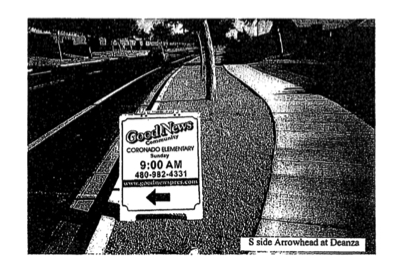
The Sign Code exempted certain signs (including the church’s) from permit requirements, but the Sign Code imposed certain restrictions including location/placement and time/duration of placement, and the Sign Code allowed for temporary In particular, the Town notified the church that it had placed a temporary sign “too early” and in a “public right of way” and that the town’s sign did not include a specific time for a specific event.

The Ninth Circuit held that the Sign Code was a content-neutral regulation and did not impermissibly favor commercial speech over noncommercial speech, and the Ninth Circuit affirmed the denial of the preliminary injunction on those First Amendment and Equal Protection claims. It remanded the case to the district court for consideration of the issue of favoring some noncommercial speech over other noncommercial speech.
The Supreme Court granted certiorari and will likely reach the issue of the content neutrality of the Sign Code even after its amendment.